Meet Polo; A Journey from Rap Scene to Influential Video Editing Mastery
 Salma Oraby

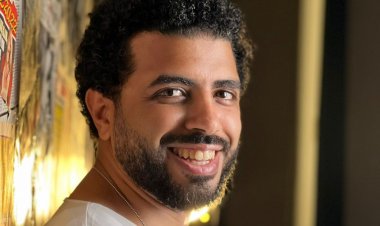
Abdelrhman Soliman, also known as Polo, has made a remarkable transition from the world of rap to the world of video editing. When Polo first began his musical career in 2010, gangsta rap had a strong hold on him. He took inspiration from artists like Tupac and Ice Cube. The emergence of the '99' project and his intense immersion in music production characterized his formative years. But as his career developed, he broadened his horizons, exploring pop and metal, and started to actualize his vision beyond music.
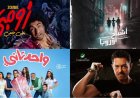
In 2013, Polo's curiosity led him to video editing, a skill he embraced to maintain creative control and enhance his artistry. This shift allowed him to produce over 200 beats and direct numerous music videos, as well as collaborate with major artists like Ahmed Kamel and Saad Lamjarred. His notable projects include the COP 27 documentary and the opening credits for "Safah El Giza”, which showcased his unique blend of visual storytelling. Driven by a relentless pursuit of excellence and personal growth, Polo's career reflects a seamless integration of his passion for music with his newfound expertise in video editing, shaping a path marked by creativity and resilience.
Let's dive into Polo's evolution as we explore his artistic journey, from groundbreaking music to dynamic video editing, and discover how his collaborations with renowned artists have defined his influential career.
Can you tell us more about your journey in the rap industry from 2010 to 2021? What were some of the key milestones?
This might seem simple, but the answer is extensive; it's a journey and a history. My journey began in 2010, though I had been listening to rap for a year or two before that. The first artists I got into were MC Amin, Arabian Knights, and Arab League. I leaned more towards MC Amin, E-money, Kordy and his group, and Shahyn.
When I first discovered rap, it was through someone I knew in Haram who was rapping. My friends introduced me to him, and he was the first person I saw rapping live, which made me love rap even more. From there, I started asking questions like, 'What is this? What is rap? How can I know more rappers? Where do I go?' I found out there were groups and gatherings in different areas, like Haram, Zamalek, and El Sawy Culture Wheel. Every Thursday, there were circles and battles. I spent about a year and a half on this journey, just discovering and making connections, and attending circles and battles.
In my second year of high school, I realized, 'This is it. This is what I want. This is the path I want to follow.' That was the moment I made the biggest sacrifice of my life. Spending so much time with rappers, my mind was completely absorbed by music. I continued in the same way during my third year of high school and barely managed to pass.
When I entered my first year of university, I delved even deeper and began to know more people. I failed my first year of university, which was the second biggest sacrifice I made in my life. After that, the sacrifices weren't very pleasant.
Until 2013, I focused on learning music production. From 2013 to 2014, I worked non-stop. In the year I failed at university, I decided that although I lost an entire year, I would make up for it significantly through work. From 2013 to 2014, I didn't sleep much; it was all about making music videos. During that time, "El Ezbaa" was rising, so I joined them.
2014-2015 were my peak years. During those two years, I achieved a lot: many concerts, music videos, collaborations with many artists, numerous beats and tracks, and big projects. This continued until the end of 2015-2016 when things started to slow down a bit until 2018.
Can you paint a picture of how your music and style have evolved over the years?
Initially, I focused on gangsta rap, heavily influenced by Kordy in Egypt as well as by Ice Cube, NWA, Tupac, and similar artists. For the first three years, my work was centered around this genre. However, in 2013, my musical perspective began to evolve. I started exploring a wider range of music, including metal, rock, progressive rock, hard rock, soft rock, R&B, and pop. This was also the time I began working on the '99' project with SY XS, contributing to the growth of this movement.
As I delved deeper into various genres and learned music production, my musical tastes and skills matured. By 2015, I started integrating trap music into my work, which continued to influence me through 2018. I revisited my interest in the trap and began experimenting with Auto-Tune in 2019, focusing on updating my equipment and keeping up with evolving music trends.
What motivated you to start producing your own music and creating beats?
Honestly, one thing I really dislike is asking for help from others and being delayed. I operate on the principle that 'done is better than perfect.' If I keep waiting for someone to make a beat for me, I won't finish anything. Plus, I have a vision; I know what I want to achieve. I don't want to explain things to anyone. I prefer to just go and execute it myself. I'll do it. The same goes for editing; I'll handle that too. I need to learn it because I have a clear vision. So, I won’t need anyone else. As a beginner, I didn't get much help initially. But then people started to assist me more significantly. One of the first people who helped me with music was Abyusif.
Since you have produced over 200 beats, how did you develop your skills in music production?
I listen to a wide variety of music and make it a point to check out every new album, regardless of the genre.
Can you share some experiences or challenges you faced while making your more than 60 music videos?
The 60 videos were solely mine, excluding El Ezbaa and others. These videos span from the beginning of my journey up until ‘Napoli’ or even earlier. The biggest challenge was my studies. I needed to pass because of the two years I had failed, for the sake of my parents and myself. Just like my current routine, I used to finish university in the morning and then work late into the night, sleeping only five hours. Back then, my focus was on studying rather than music, and I worked really hard for myself. The second challenge was the community. No one understood what I was doing at all, but thank God, I had a clear vision and knew I was right. Gradually, everyone began to understand and believe in it.
Those were the challenges, and then there were the psychological ones. Immediate results were scarce, and I faced many setbacks. Success came only after a lot of hard work, with numerous moments of frustration and discouragement. Some people tried to demotivate me, and sometimes I wasn't satisfied with the outcomes. But thankfully, I never gave up.
You've had the opportunity to collaborate with some prominent artists. How did those collaborations come about, and what did you learn from them?
Quite simply, many businesses helped me get here. If I work hard on the product, people will come. It's that simple; high quality attracts people.
How did financial constraints in your early days influence your decision to learn video editing, and how has that skill shaped your career since?
I learned video editing in 2013 because I didn’t want to rely on anyone else. I have a vision, and I was more curious about editing than music production. I thought, 'What’s this? I can actually benefit from this video.' From day one, without fully understanding it, I felt that editing had a powerful impact. It’s a significant force that can control many things and attract people to benefit from my skills.
You previously mentioned that 2023 was one of the most challenging but also the most successful for you. Can you dive into the highs and lows, and how you managed to turn challenging times into your most productive year yet?
This question is deep. It was the hardest year because I broke off my engagement, and it was a very challenging period. That year was extremely tough for me psychologically as I worked hard to fix things with my ex-fiancé. I would sit in sessions with top directors and work on projects while being in my worst emotional state. Going through a separation left my heart completely shattered.
The important thing is that it was a major challenge. I didn’t know how to handle it. As an artist in the same industry, I had to learn how to separate myself from my emotional state. I had to figure out how to create and perform even when I was in that condition.
I didn't even know if I could think clearly or work. I felt trapped as if I was losing both my life and my job. The key is finding a way to be free within your own constraints. Do you understand? I was thinking, 'I'm about to explode... But I have to keep smiling in front of these people to avoid losing my job... Ultimately, though, it all comes down to love. That’s what matters most.’
In my life, I've faced significant losses. In 2012, my brother passed away, and I had to keep moving forward despite intense psychological struggles. In 2014, I experienced the death of my aunt right in front of me, which caused profound emotional distress. I spent a long time recovering but continued with my studies, music, and other pursuits. In 2016, I lost the girl I loved, but I managed to pick myself up and keep going. This cycle of highs and lows continued, culminating in separation from my loved one in late 2022 or early 2023. Despite our efforts to reconcile, 2024 has been even more challenging than 2023, yet I've achieved significant success this year.
Speaking about that same year, can you elaborate on the major projects and achievements of this year?
I worked on a documentary with Marwan Hamed, created significant advertisements, travelled to Dubai, and collaborated with Joe Hattab on a documentary film. I also handled the opening credits for "Safah El Giza" and produced numerous important ads and music videos. In 2024, I directed various projects, including a music video for Saad Lamjarred, a trailer for Gawdar, and a full music video for Ahmed Kamel. In total, I directed about five music videos that year.
Reflecting on your creative process, what strategies or rituals do you employ to maintain your artistic flow, especially during tough times?
I don’t have a set routine and don’t do much during anxious moments. I often find myself praying, reciting, “There is no god but You, Glory be unto You! Indeed, I was among the wrongdoers,” to calm myself. When anxiety strikes, I focus on the present moment, trying to get through each minute. It’s challenging, but I remind myself that this minute will pass. I watch a video or distract myself until that minute is over, then move on to the next. The intense psychological pressure makes it hard to think beyond the immediate moment.
Out of all the music videos you've produced, which one holds the most personal significance and why?
My video, "Fatra Zamania," was released in 2019 after a year-long hiatus. In this video, I covered everything that had happened during that period. It received high praise for its filming, directing, and editing. Despite the intense frustration I was experiencing, the project turned out to be a significant achievement. Editing and other aspects of the video were deeply meaningful to me. I’m genuinely proud of all the projects I've worked on, especially those from the last three years—they feel like my children, true masterpieces.
Can you describe a particularly memorable project you worked on and why it stands out to you?
The documentary I worked on for COP 27 was my first major project as the lead editor, thanks to an opportunity given to me by Mr. Ahmed Hafez and Marwan Hamed. At that time, I was dealing with a recent breakup and felt emotionally shattered. However, Marwan Hamed began to appreciate my work and get to know me, which was a dream come true. It was the first time I truly felt I was achieving a significant goal.
Completing the checklist for this project was an indescribable feeling. Creating standout sequences and receiving positive feedback from Marwan Hamed was incredibly satisfying. As I began to excel in my work, it filled me with immense pride and fulfilment.
As someone who has achieved so much, what dreams and goals still keep you motivated and excited for the future?
I aspire to become legendary. After 13-14 years of dedication, stopping now isn't an option. I imagine that if I were to quit, I'd be swallowed up and fail. I must continue pushing forward to achieve my goal, or risk falling short and fading away. I constantly nurture myself mentally and have sacrificed a lot along the way. I believe that God gifted me with artistic talent from a young age. Even in preparatory school, people noticed something unique about me, which was when I began to explore my abilities.
Art doesn't choose the artist; the artist is chosen by art. Talent finds its way to those who are truly meant for it. I understand what it means to be an artist and how to manage my sensitive talent with patience and care. For me, the ultimate goal is success—achieving recognition and leaving a lasting legacy. I want to know that I made a meaningful impact and that my work will endure beyond my time on this earth. I aim to create something that makes people say, "Wow, someone did this." Additionally, I strive to maintain a strong spiritual connection and leave a positive mark in that realm. My goal is to inspire others, be a symbol of motivation, and continuously serve as a source of inspiration through my talents, relationships, and career.