Preserving Egypt’s Cultural Tapestry: “GebRaa” by Rania Seddik Celebrates Egypt’s Rich Artistic Heritage
 Concept Team
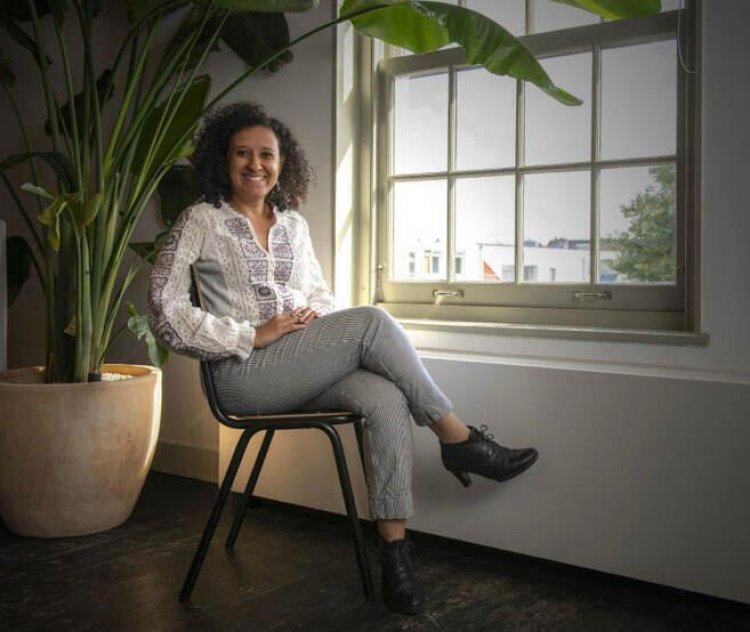
Aiming to preserve Egypt's 7,000-year-old legacy of craftsmanship, Rania Seddik founded "GebRaa." Her deep appreciation for ancient art and handcrafts, integral to Egyptian daily life and reflecting extraordinary ingenuity and beauty, inspired this initiative. These crafts, seen in ancient temples through elaborate carvings, jewelry, and pottery, showcase the Egyptians' dedication to craftsmanship and aesthetics. An ambitious Egyptian woman, Rania Seddik, devoted herself to reviving traditional crafts and supporting creative craftsmen both socially and economically through her innovative platform, "GebRaa."
Let's welcome Rania and sink deeply into her journey from the beginning till now.
It’s an honor for Co magazine to have this chance to interview you, Rania, would you mind explaining the meaning of “GebRaa, and what the root of this name is?
The name GebRaa is a mix between Geb and Raa. For the ancient Egyptians, "Geb" represented fertility and the art of cultivating land, while "Raa" was the archetype of sun and fire. The rest of the logo discusses the remaining facets of Egyptian identity. The Logo's blue color denotes water, the Eye of Horus signifies air, and the three layers—the lotus flower symbolizing ancient Egypt, the flowers denoting Greek and Roman civilization, and the geometric element signifying Coptic and Islamic cultures. The whole name expresses the Egyptian identity in its various layers.
What is the purpose of Establishing “GebRaa” and its main target?
GebRaa is a platform to revive the Egyptian traditional crafts, especially those that are on their way to disappearing. Since our foundation in 2006, we took upon ourselves the duty of supporting handcrafts by developing these products in design, material, function, and use of green technology, in addition to creating a sustainable society for the handcrafted and their families through providing them job opportunities especially in rural and remote communities for reducing immigration rates to Cairo and outside Egypt, as well as to empower women.
But why did you select the field of handcrafts which is a great challenge, particularly nowadays?
Actually, two motivations drove me to this field. The first was to provide jobs so that artisans could support their families by sending their kids to school. Reviving the Egyptian identity was the second. I adore my nation and want everyone to understand how important it is to be Egyptian.
Handcrafts is one of the most significant fields around the world which provides many job opportunities, it is the second largest field of employment after agriculture. It is noteworthy that encouraging work in this field reduces the migration of workers abroad, and that this field provides job opportunities for women from their homes and for men from workshops. This also makes it easier to use materials found in the environment. Preserving knowledge passed down through the ages and introducing people to Egyptian culture are two other things that drew me to the handicraft industry. Unlike agriculture, this industry does not require a lot of cash or a vast work area.
And how did those around you react to this step—that is, did they encourage you or not?
I faced no objection from people surrounding me and that wasn't the issue. However, I faced many challenges at the beginning of entering the handicraft industry, including getting funding, finding markets, finding talent, marketing, and finding clients. I had a lot of challenges since I'm a woman. It is very difficult for women to work with artisans because they do not honor their word or make it easier for women to deal with them. Regretfully, women are not afforded the same options or opportunities by society as men.
Regarding the government, do you have any support from it?
Although the government does not directly assist us, it does make a significant effort to promote small businesses and crafts, particularly for women, as part of its strategy to empower women. Furthermore, we still require greater support for traditional crafts to grow our businesses by streamlining the processes and putting an end to the bureaucracy we endure. We also need to lower the cost of these processes so that more people can afford participating in international fairs where we can showcase our great heritage to people all over the world.
How did you persevere through all of these difficulties and attain all of your successes in this field?
With persistence, obstinacy, forbearance, and resolve. Never has it been simple. Even though I lacked prior management experience, I had faith in my abilities and gradually picked up a lot of knowledge. We had some funding issues, but we solved this problem by creating a non-profit organization to attract donations. As the main objective of our project is to increase awareness and pass expertise to new generations of artisans so that this sector does not perish, we were accredited by UNESCO. On the other side, we also address the issue of marketing our products by targeting various consumer types and offering a range of items, participating in competitions, and drawing in designers to design new products that can attract new customers all over the world.
One of the most talented labor groups in the world is the Egyptian handcrafters. How did you find the skilled aritsans?
Finding qualified artisans wasn't an easy matter, particularly at the beginning. I had to travel to numerous places in Egypt to find them. I went to St. Catherine, Sohag, and Qena. Though things have grown easier now that I've met a lot of workers, am well-connected, and have met a lot of people. On the other hand, I'm still looking for employment and haven't stopped learning about different skill sets or hiring people from all over the place.
And how could you attract those craftsmen to work on your project?
Such handcrafters were difficult to draw in since they were constantly searching for places with more profits. As a result, many crafts are vanishing and are also impacted by Egypt's current tourism situation. To prevent artisans from seeking employment elsewhere, we are trying to increase public awareness of handicrafts and offer them social and financial support. Not only that, but we are also keen to provide them with a family lifestyle where families live and work together even in Cairo or in the Upper Egypt as they usually work in their homes. People who labor in handicrafts are priceless. But things are a lot better now. We train women, individuals with impairments, and young people. We focus on teaching graduates of technical education the value of this profession.
How do you raise awareness about this field?
We aim to educate the public and raise awareness among youngsters, workers, and schools. We are storytellers; we use our products to tell tales, and we use our work to spread the word about the stories we tell. As part of our interest in supporting the global direction of ensuring sustainable consumption and production patterns, which is part of the UN Sustainable Development Goals (SDGs), our primary goal is to give our society a new understanding of how we can achieve a sustainable life in all of its aspects through the production of sustainable products able to compete globally and at the same time support the idea of a sustainable model.
GebRaa is distinct with various products, what is the most important one of them?
All of our products are distinguished and spectacular, but the most significant product we are proud of is the revival of "Senet," the most well-known ancient Egyptian board game, whose earliest known representation dates to approximately 2620 BCE. All of our items are unique and stunning. The Egyptian handcrafters' grandsons were able to help us manufacture it once more. As part of our efforts to introduce "Senet" to young people worldwide, we have already hosted tournaments and discussions about the game in a variety of settings, including libraries, embassies, and museums.
Technology is playing an important role in our lives today, what is the role of technology in your work, and is there a conflict between using technology and handcrafting?
No, they complete each other, after the huge spread of using technology in manufacturing various industries, handmade become more precious as it is a unique products, and only those who know the value of such products are more interested in having them as a way of supporting their country's product.
Also, we use technology through social media platforms to raise awareness about supporting local brands. We also spread the word on the importance of handcrafts, in addition to digital marketing as a medium to market GebRaa products.